Around 500,000 Government Records
Scanned & Migrated.
An overseas government department needed its registry of associations and foundations moved off paper. We scanned around 500,000 sheets in three months, then spent one month sorting, OCR-processing and extracting the data, so every organisation now has a structured record and a history of its changes.
Project at a glance
- Client
- An overseas government department: its registry of associations and foundations
- Volume
- Around 500,000 sheets, captured as 525,315 page images
- Timeline
- 3 months of scanning, then 1 month of sorting, OCR and data extraction
- Organisations
- 6,000+ associations and foundations, each with its own record
- Delivered
- Structured data per organisation plus its history of changes, taken from the original documents
- OCR
- 525,315 page images processed with zero OCR failures
Services used: Government records digitisation · Document digitisation services · OCR scanning services · AI document classification · AI data extraction
Project Gallery
Photos from the project and screenshots of our processing platform. Client details are blurred for confidentiality.

Registry files boxed for intake. Client details blurred for confidentiality.
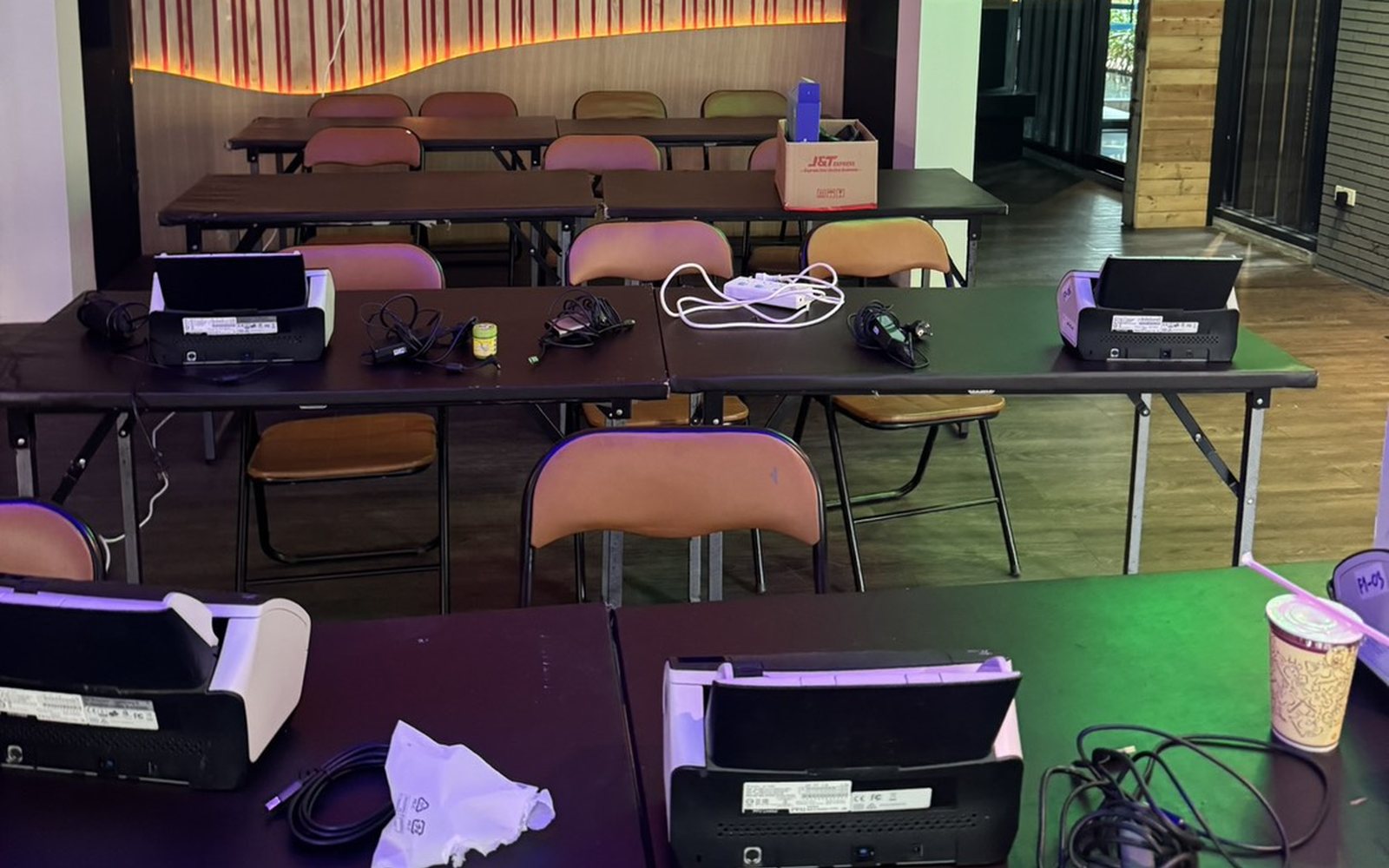
Scanning stations set up to run several scanners in parallel.

Numbered files and shelved records. Labels blurred for confidentiality.
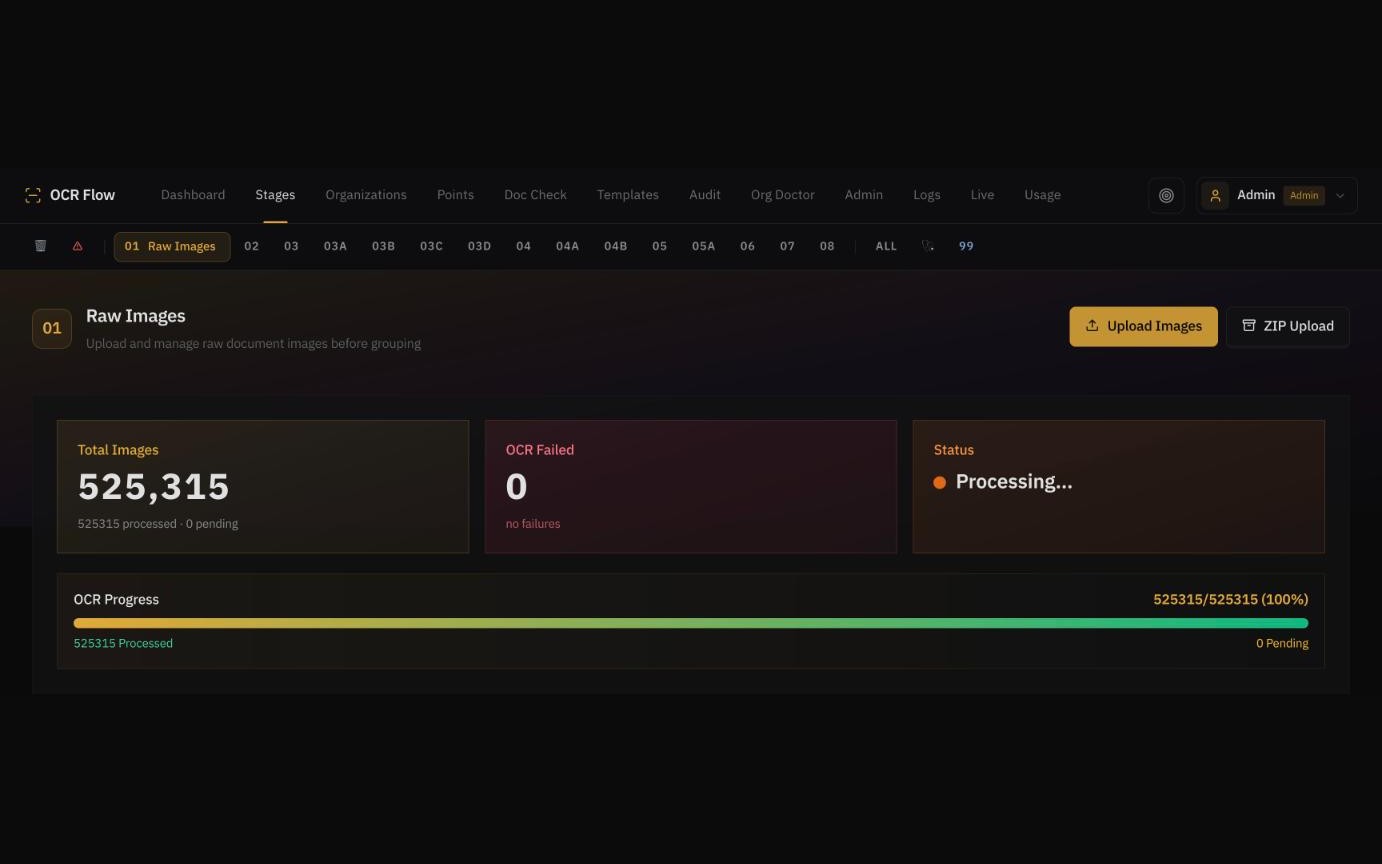
Our processing platform: 525,315 page images OCR-processed, zero failures.
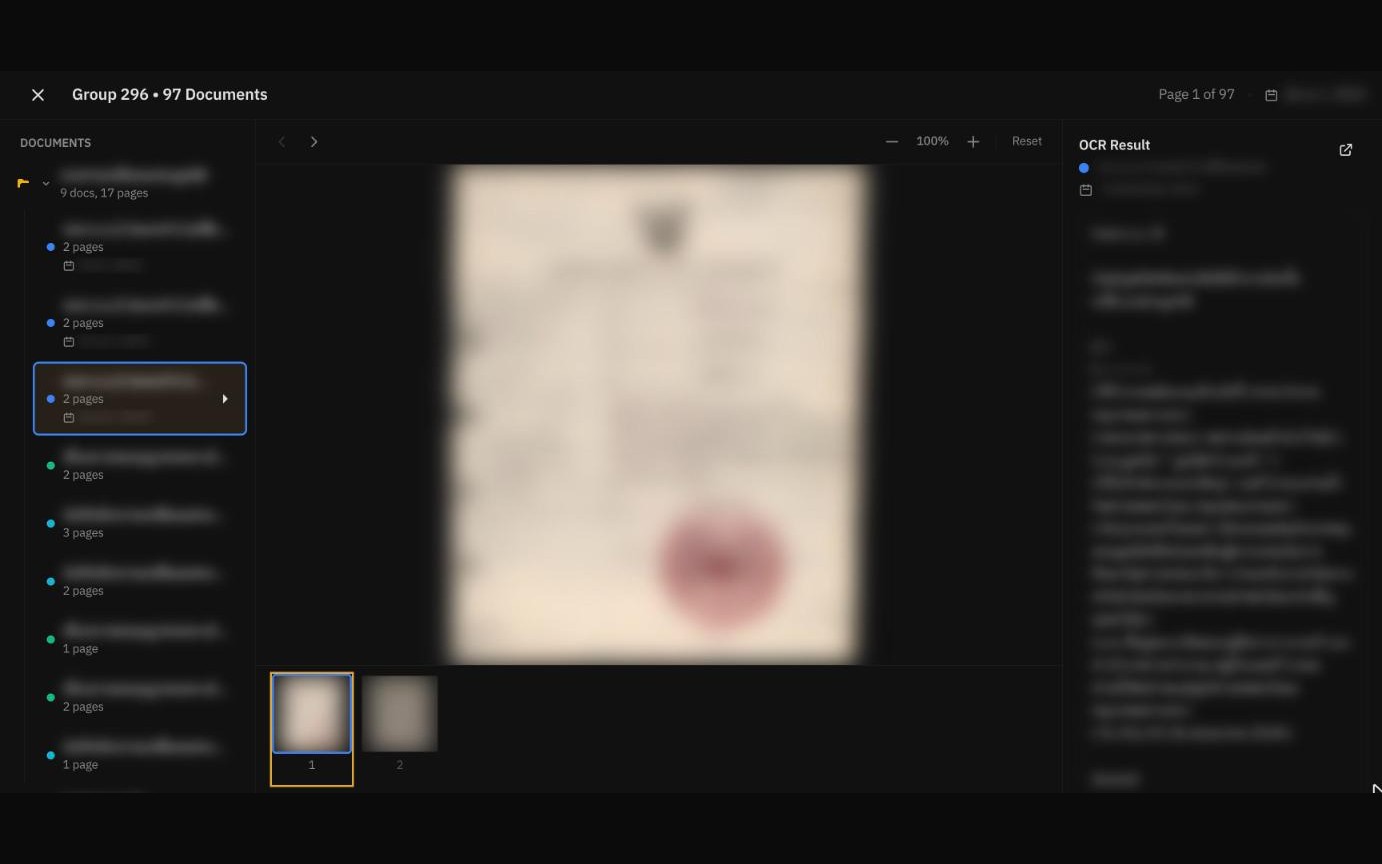
Each organisation's documents in date order, with the scan beside its OCR text. Data redacted.
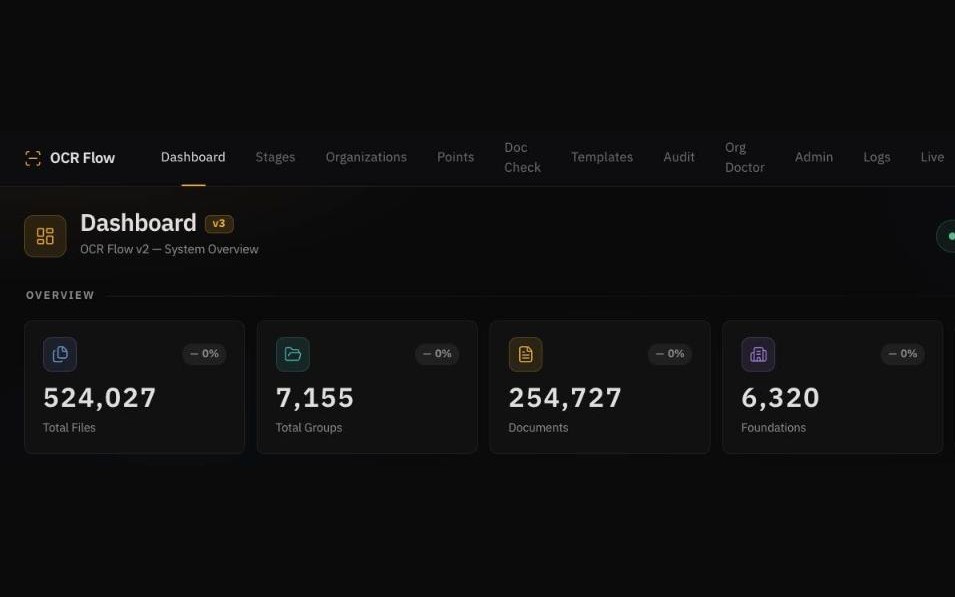
Live overview of the platform: files, document groups, documents and foundations tracked as work moves.
The Challenge
A registry that lived on paper.
The department holds the official records of registered associations and foundations: registration documents and the paperwork recording later changes to each organisation. Around 500,000 sheets of it existed only on paper, so finding an organisation's current details, or how they had changed over time, meant working through the files by hand.
Our Approach
Three months of scanning. One month of data.
Scanning
Around 500,000 sheets scanned across several scanning stations working in parallel, all feeding one shared processing platform.
Grouping & AI Labelling
Pages were grouped into document sets for each organisation, then AI labelled every document by type and date. Duplicate scans and mixed files were flagged for a person to confirm.
Two Rounds of Human Review
Reviewers checked the AI labels in two rounds, and OCR text was re-checked before any data was extracted.
Data Extraction & Change History
AI extracted each organisation's registration details, charter clauses and committee members. Reviewers checked the results, with any issues flagged by severity.
Why It Was Fast
Every stage running at once.
Four months for half a million sheets came from how the work was organised, not from cutting corners. Our processing platform splits the job into small, separate tasks so scanning, AI processing and human review all happen side by side.
- 01Raw ImagesPage images uploaded and OCR-processedAutomated
- 02GroupPages grouped into one file per organisationAutomated
- 03Label (R1)AI labels each document's type and dateAI
- 04Label (R2)A second reviewer double-checks the labelsPeople
- 05OCR ReviewAI re-reads key documents and the text is checkedAI
- 06Auto ParseAI extracts registration details, rules and committee membersAI
- 07Parse ReviewReviewers check the extracted data, with issues flagged by severityPeople
- 08ResultA final, read-only record for each organisationAutomated

An assembly line, not a queue
The work is split into separate stages: scan, group, label, review, OCR, extract and check. Each organisation's file moves through on its own, so every stage runs at the same time on different files instead of waiting for the one before it to finish.
Scanning and OCR in parallel
Several scanning stations fed one shared platform, and page images were OCR-processed by 10 workers running side by side.
AI does the first pass
AI labelled every document against 59 document-type templates, re-read key documents and extracted the data. Automated runners pick up the next file as soon as it is ready, day and night.
People check, in parallel
Around 20 reviewers worked at the same time, each on their own files, with every review task tracked per person so work never doubled up or went missing.
Problems don't stop the line
Duplicate scans, mixed-up files, copies of the same document and mismatched organisations go to their own queues. The system suggests the fix, a person confirms it, and everything else keeps moving.
Less to process, everything visible
Confirmed copies are skipped, so they are never re-read or extracted twice. A live dashboard and automatic checks show where work is building up.
The Results
From paper files to structured records.
The department now has structured data for its registered associations and foundations, together with each organisation's history of changes, all taken from the original paper records. What used to mean searching through files is now a lookup.
Have a Similar Project?
Tell us your archive volume and required output so the project can be scoped. A free pilot of up to 500 pages is available to review the output before a larger project. Collection and return delivery costs are not included.